


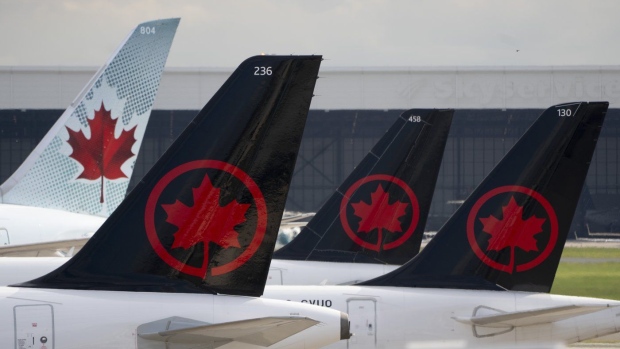
In a recent report, Air Canada found itself at the bottom of the list for on-time performance among the top 10 largest airlines in North America. This ranking reflects the challenges faced by Canadian carriers as they strive to regain their footing in the post-pandemic era, despite faring better than the turbulence of 2022.
On-Time Performance Statistics:
- Air Canada, the largest Canadian carrier, achieved on-time performance for only 51% of its flights last month, as reported by aviation data firm Cirium.
- WestJet, another prominent Canadian airline, secured the seventh position with 62% of its flights arriving on time, defined as within 15 minutes of the scheduled arrival.
- In stark contrast, top performers Alaska Airlines and Delta Air Lines boasted on-time rates of 82% and 79%, respectively.
- The average on-time performance for North American airlines stood at a meager 66%, the lowest among regions tracked in the report, including Europe, Latin America, the Middle East, and Africa.
Challenges Faced by Air Canada: Air Canada attributes its on-time struggles to several factors, including a shortage of air traffic controllers, thunderstorms, and a network operating at full capacity due to high demand. These conditions can lead to longer recovery times after disruptions, impacting overall performance.
Despite the challenges, Air Canada has been accommodating approximately 140,000 passengers per day on its 36,000 flights each month. Spokesperson Peter Fitzpatrick noted that while some delays were experienced, many were relatively short.
Issues with Air Traffic Control and Staffing Shortages: The International Air Transport Association (IATA) has criticized air traffic control organizations in North America for ongoing staffing shortages, resulting in unacceptable delays and disruptions. Nav Canada, responsible for air traffic control in the country, acknowledged that delays at major airports have been partly due to a lack of controllers.
These delays have consequences, such as extending flight crew shifts, reducing time for preventative maintenance between flights, and contributing to mechanical issues and further delays.
Advocacy for Passenger Rights: Amidst these challenges, advocacy groups have submitted recommendations to the Canadian Transportation Agency, aiming to improve passenger rights. They advocate for clearer and more streamlined regulations, emphasizing passengers’ rights to assistance, compensation for denied boarding, and prompt refunds regardless of flight disruptions’ causes. They also propose redefining “exceptional circumstances” to limit airlines’ exemptions from compensation in cases of delays or cancellations.
Efforts to Improve On-Time Performance: Air Canada has been taking steps to enhance its on-time performance, including increasing staff levels beyond pre-pandemic levels and expanding its flight schedule. The airline has also partnered with other carriers and implemented various measures to alleviate traffic peaks and address operational challenges.
In summary, Air Canada’s struggle with on-time performance reflects broader challenges in the aviation industry as it recovers from the pandemic. Addressing staffing shortages and enhancing passenger rights are critical steps toward ensuring smoother and more reliable travel experiences for all passengers.